Saving Wildcats celebrates landmark 50 wildcat releases
Posted 28 Sep 2026
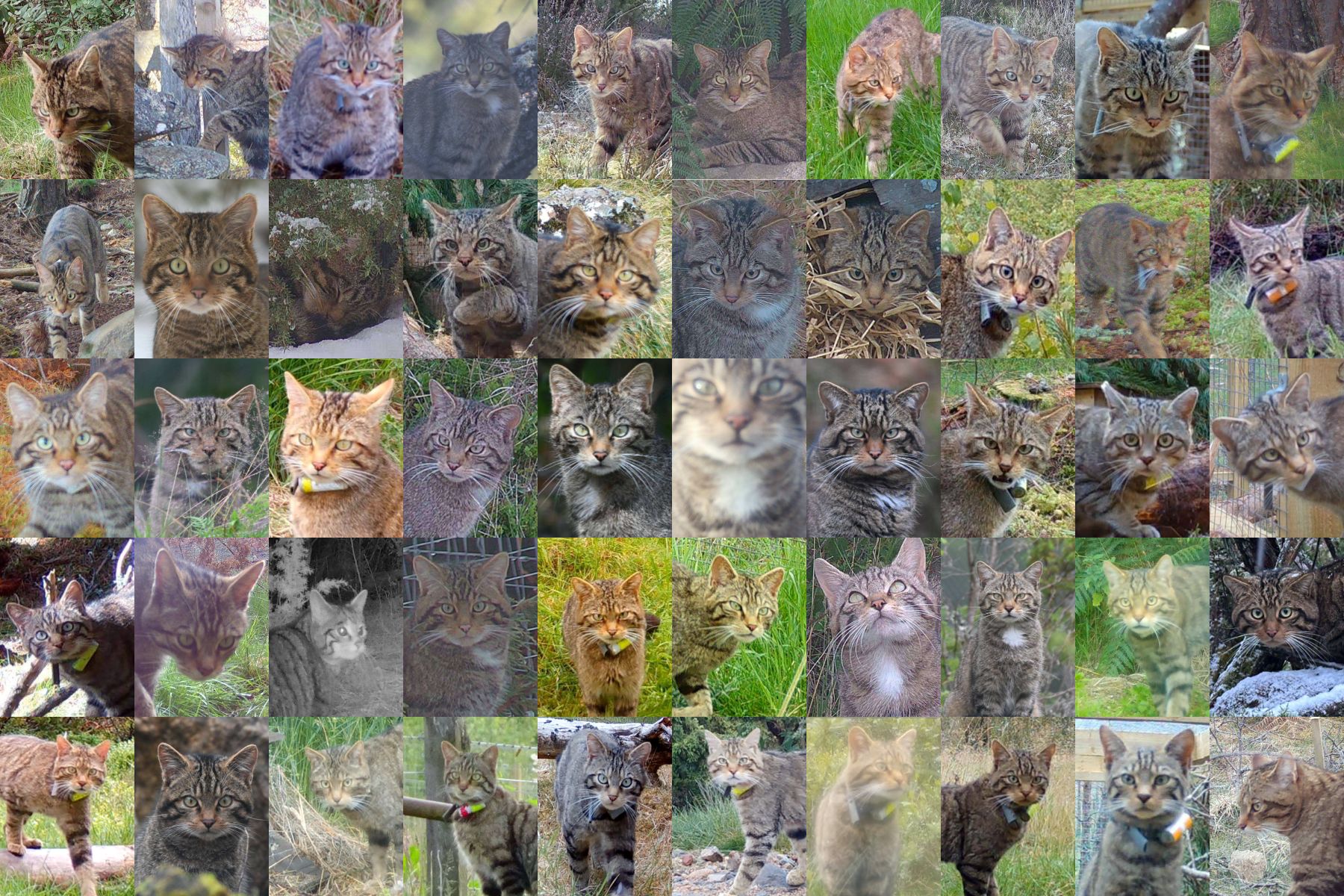
Conservationists at Saving Wildcats are celebrating the release of fifty wildcats into the Scottish Highlands. This major milestone was reached following the release of four wildcats this summer.
Saving Wildcats is a partnership project led by wildlife conservation charity the Royal Zoological Society of Scotland (RZSS). It works to save wildcats from extinction in Scotland and has been releasing the species into the Cairngorms National Park since 2023.
The project shows promising results. Females have given birth in the wild for three consecutive years suggesting the population is establishing itself naturally. Despite such positive outcomes the species remains critically endangered in Scotland and in need of ongoing support.
This news follows NatureScot’s publication of Scotland’s Wildcat Strategy last week. The strategy builds on the lessons learned from Saving Wildcats’ successes to inform the next steps to secure the future of Scotland’s wildcats.
Dr Sarah Henshall, head of conservation for the Cairngorms National Park Authority said: “To have released fifty wildcats in four years is a monumental step for the recovery of this iconic Scottish species. It is a testament to the partnerships and communities that are working to ensure wildcat survival in Scotland. We are proud but we all remain conscious of the difficulties wildcats still face.”
The project hopes to bolster the released population by increasing numbers and genetic diversity through further releases. This will include releasing individuals bred with Spanish wildcats which are the closest living genetic relatives of Scotland’s wildcats.
Dr Helen Senn, head of conservation and science programmes at RZSS said: “The wild is a tough place for wildcats and that is before the added pressures of climate change. Just look to this summer where wildfires caused extensive damage to known wildcat habitats in the Cairngorms National Park.
“It is important to continue bolstering the wildcat population through releases. Establishing a diverse gene pool will help the population adapt to changing conditions over the coming century. This will support a healthy and sustainable population and give wildcats the best chance of long-term survival.”
Wildcat habitats often overlap with land managed by people. These landscapes provide a mosaic of forest edge, rough grassland, scrubland and riparian areas where dry land meets water. Saving Wildcats works closely with land managers, farmers and local communities to support coexistence between wildcats and the people who live alongside them.
Eleven mortalities have been recorded among released wildcats over the course of three years. Five were the result of vehicle collisions. Many of these wildcats survived in the wild for several years and produced litters before their deaths. This mortality rate is considered highly successful as rates are often higher in other translocation projects.
The team is working with local authorities and communities to raise awareness of wildcats in the landscape and explore opportunities for additional signage across the area.
Many people are helping to support the return of wildcats to Scotland by sponsoring a wildcat in the Conservation Breeding for Release Centre savingwildcats.org.uk/sponsor
Saving Wildcats is a collaboration between the Royal Zoological Society of Scotland, NatureScot, Forestry and Land Scotland, The Cairngorms National Park Authority, Norden’s Ark, Junta de Andalucía, Cats Protection, Game & Wildlife Conservation Trust and Agroecosystems Ltd. Wildcat releases are conducted with support from Cairngorms Connect. The partnership is further supported by the LIFE programme of the European Union and the Scottish Government’s Nature Restoration Fund, managed by NatureScot, as well as many other funders and vital contributors who all share the vision of restoring wildcats in Scotland.
Notes to Editors
Hi-res images and video available at: https://we.tl/t-pRO56rducu5EcBPh
Images and video are free to use. Please credit Saving Wildcats.
Notes to editors
In July, Saving Wildcats announced a third consecutive year of wild births - Wild kittens born to released females for third year in a row
Wildcats released by the project are born and prepared for the challenges of the wild at Saving Wildcats’ conservation breeding-for-release centre. It is based at RZSS’s Highland Wildlife Park and is the first of its kind for carnivores in the UK.
Eleven wildcats released by the project have died. Five were from vehicles collisions: four cars and one train. Other causes of death include starvation and infection.
The EU LIFE programme provides funding for environmental, nature conservation, climate and clean-energy projects across Europe. EU LIFE funding for Saving Wildcats project is now coming to an end, as UK organisations are no longer eligible to apply following the UK’s departure from the European Union. The project is grateful to have received further support from the Scottish Government’s Nature Restoration Fund, which is helping to support conservation efforts - Nature Restoration Fund secures a future for Scotland’s wildcats
About Saving Wildcats (#SWAforLIFE)
Saving Wildcats is a partnership project led by RZSS in collaboration with NatureScot, Forestry and Land Scotland, Cairngorms National Park Authority, Nordens Ark and Junta de Andalucía. Releases are being conducted with the support of Cairngorms Connect. Trap-Neuter-Vaccinate-Return work to mitigate hybridisation (interbreeding) and disease transfer is conducted together with Cats Protection. Work to move towards a fair coexistence between wildcats and people is conducted alongside the Game & Wildlife Conservation Trust (GWCT). The project is seeking to build strong collaborations with the farming sector together with Agroecosystems Ltd. Together, the partnership is working to prevent the extinction of Scotland’s wildcats by breeding and releasing them into the wild, while tackling threats such as hybridisation with domestic cats.
The project is supported by the LIFE Programme of the European Union, The Scottish Government’s Nature Restoration Fund, managed by NatureScot, Garfield Weston Foundation, the National Trust for Scotland, the People’s Trust for Endangered Species, The European Nature Trust, players of the Postcode Lottery, Rewilding Europe’s European Wildlife Comeback Fund, and many generous others.
Partner information
The Royal Zoological Society of Scotland (RZSS) is a wildlife conservation charity which owns Edinburgh Zoo and Highland Wildlife Park. We safeguard threatened species from extinction: rzss.org.uk
NatureScot is Scotland's nature agency. Responding to the twin crises of biodiversity loss and climate change, we work to protect and restore nature by inspiring everyone to value our natural world. Our goal is a nature-rich, net-zero future for Scotland. For more information, visit our website: nature.scot
Forestry and Land Scotland (FLS) is the Scottish Government agency responsible for sustainably managing Scotland’s national forests and land to make positive contributions to the economy, environment and people of Scotland: forestryandland.gov.scot
The Cairngorms National Park Authority was set up to ensure that the unique aspects of the Cairngorms – both the natural environment and the local communities – are cared for, sustained and enhanced for current and future generations to enjoy. The Cairngorms National Park Authority provides leadership to all those involved in the Cairngorms and works in partnership with a range of communities, businesses, non-government organisations and public sector partners to deliver practical solutions on the ground: cairngorms.co.uk
Nordens Ark, based in Sweden, works to ensure endangered animals have a future: en.nordensark.se/
Consejería de Sostenibilidad, Medio Ambiente y Economía Azul de la Junta de Andalucía, based in Spain, leads Europe’s most successful carnivore reintroduction of Iberian Lynx: juntadeandalucia.es/medioambiente/site/portalweb/
Cairngorms Connect is a partnership of neighbouring land managers (Wildland Limited, Forestry and Land Scotland, RSPB Scotland and NatureScot) working towards a 200-year vision to enhance habitat, species and ecological process across a vast 600 square kilometre area within the Cairngorms National Park. It is the largest habitat restoration project in the UK: cairngormsconnect.co.uk
Cats Protection is the UK's leading cat welfare charity. It helps an average of 156,000 cats and kittens a year through its national network which includes around 182 volunteer teams and 31 centres: cats.org.uk
Game & Wildlife Conservation Trust (GWCT) is a leading UK charity conducting conservation science to enhance the British countryside for public benefit. For over 90 years it has been researching and developing game and wildlife management techniques. GWCT advisors use research to provide training and advice to farmers and land managers on how best to improve the biodiversity of the countryside: https://www.gwct.org.uk/
Agroecosystems Ltd offers independent agricultural and environmental support for farms, crofts and estates with a strong understanding of farm business and practical management: https://www.agroecosystems.co.uk/