Pallas’s cat
/pallascat_3_jp.jpg)
Central Asia is home to an immense variety of fascinating felines. Most people are familiar with the iconic snow leopard, but there is another, more mysterious little cat that inhabits these remote steppes and mountains – the Pallas’s cat (Otocolobus manul). With its wide range spanning 16 countries, RZSS works on a global scale to help protect this unique species.
The Pallas’s cat, or manul, is about the size of a domestic cat, but its thick fur makes it appear larger and provides great insulation from the harsh conditions it lives in. It's sulky facial expressions have earned it the ‘original grumpy cat’ nickname and are partly caused by Pallas’s cats’ eyes having round pupils rather than slits like all other small cats.
Pallas’s cats face various threats across their wide range, mainly habitat loss and degradation due to agricultural expansion and infrastructural development, loss of their preferred prey (small rodents) and predation by domestic dogs. Their secretive nature and the remoteness of their habitat also make them difficult to study, and they are amongst the least known wild cat species in the world.
RZSS has been working in close partnership with Nordens Ark, Snow Leopard Trust and many other organisations to enhance global conservation efforts for these cats since 2016 as part of PICA, the Pallas’s cat International Conservation Alliance. Building local capacity, supporting dedicated research, raising awareness, strategic planning and boosting international collaboration are all at the core of the project.
Today, the Pallas’s cat has a dedicated Conservation Strategy, is listed under the Convention on Migratory Species (CMS), and the PICA Small Grant Programme has supported over 12 field conservation projects for the species in 10 range countries. Global awareness is also on the rise and the ‘Manul monitoring guidelines’ are helping researchers study these elusive cats in the wild.
Our Partners and Funders
/pica.png)
/nordensark_logo.png)
/snowleopardtrust.png)
Project type

Large-scale intiatives
The team
Kasia Ruta
Conservation manager (international)
David Barclay
Conservation manager (ex-situ)
Dr Helen Senn
Head of conservation and science programmes
Project updates
/arkharly-2%2011140222%20manul.jpg)
July 2026
The PICA team participated in the workshops led by the IUCN and Manul Working Group to put together the first IUCN Green Status of Species assessment for the Pallas’s cat. The main findings highlight the uncertainty of the species’ status at both global and regional levels due to its cryptic nature and lack of data, and the urgent need for additional monitoring and research to guide future conservation efforts. The Green Status is a metric used to measure species recovery and conservation impacts over time, to be used in conjunction with the IUCN Red List assessments.
/uzbekistanconference.jpg)
December 2025
Kasia Ruta (RZSS) and Emma Nygren (Nordens Ark) from the PICA team attended the CITES CoP20 in Uzbekistan to advocate for better protection of Pallas’s cats and other small cats of Central Asia. PICA also co-hosted a side event, “Small cats of the Silk Road”, that highlighted species such as the Pallas’s cat, caracal, and sand cat and the need for more dedicated conservation efforts, transboundary collaboration, and boosting local capacity for small felids. Our co-hosts included government and academic partners from Uzbekistan, IUCN Cat Specialist Group, and Team Bars Turkmenistan of Conservation X Labs.
/kazakhstanpica.jpg)
October 2025
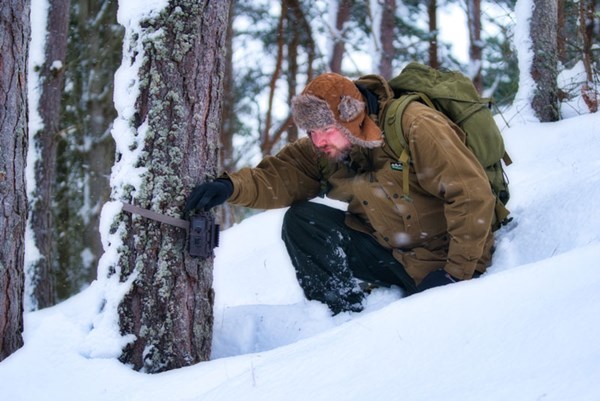
The PICA team attended a Manul Monitoring Workshop in Almaty, Kazakhstan where strategies to expand and standardise Pallas’s cat field monitoring methods across Central Asia were discussed - establishing a long-term monitoring network is a key next step in conservation of this feline. At the meeting, organised by the Manul Working Group and ACBK, global species experts also reviewed the Pallas’s Cat Conservation Strategy 2018-2028, assessing its implementation, and planning future activities. After the workshop, the team headed out into the field to set up camera traps to collect critical, long-term data on these elusive cats.
/pallas_cat_otgonbayar1.jpg)
/pallas_cat_2_jp.jpg)
/pallas_cat_otgonbayar.jpg)
Relevant news
View all news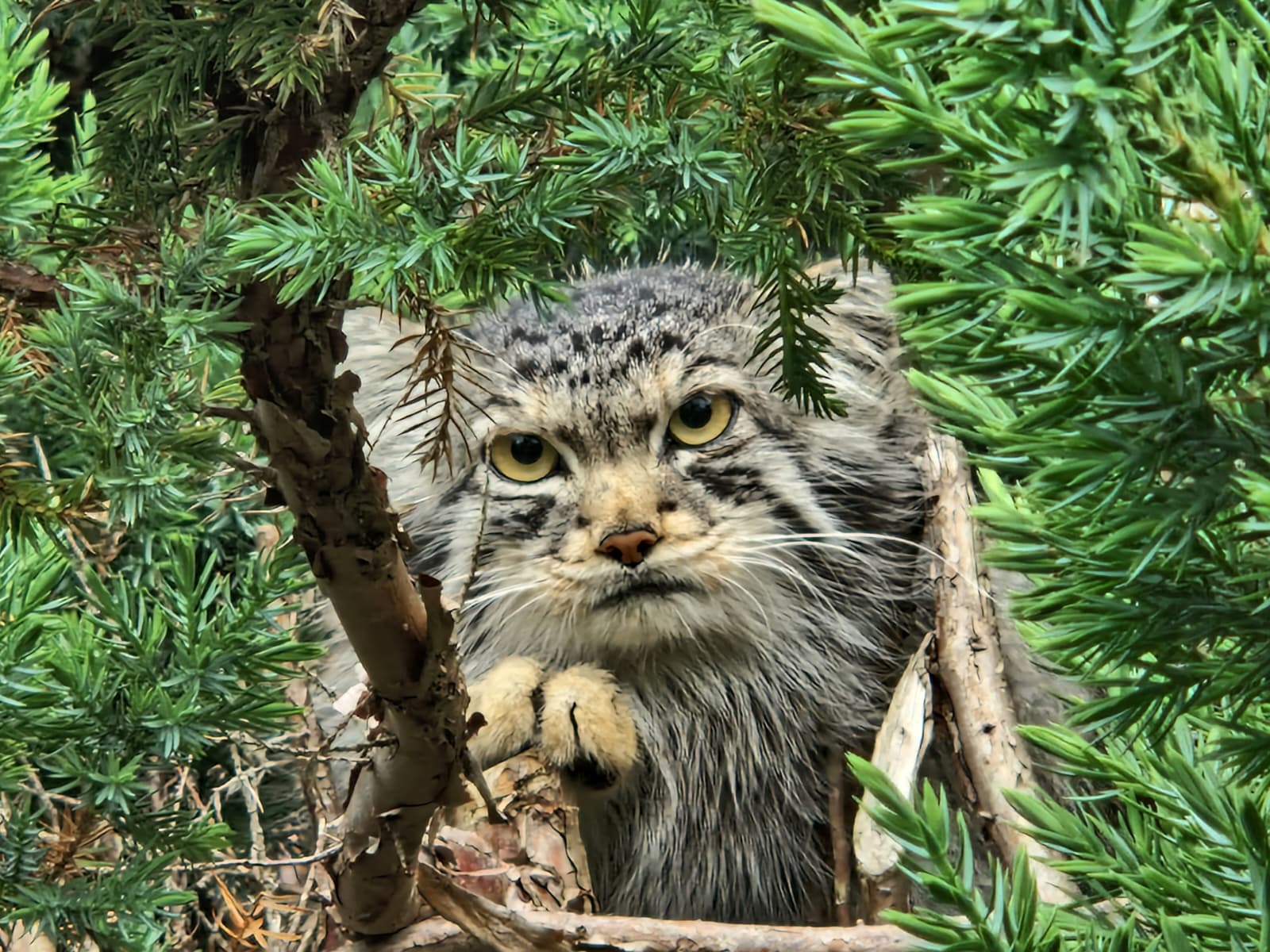
29 Jun 2026
Two minute read
22 Apr 2026
One minute read
/pallass cat image.jpg)
23 Apr 2025
Three minute read
Ways you can support
Save the animals you love
So many of the animals you love are disappearing in the wild. By donating today, you will be joining a group of caring people like you who are helping to protect our natural world.
Connect your business to nature
You can get involved in our work via corporate partnerships, corporate sponsorships, exclusive volunteering opportunities, in-kind gifts and much more. Being a corporate partner is a unique path to meeting your business and corporate social responsibility needs.
Join RZSS as a member
RZSS membership provides much more than just free entry to Edinburgh Zoo and Highland Wildlife Park. Your membership helps support our charity's conservation work around the world.
/icas anteater 2.jpg)