
Himalayan wolves project update: 2023–2025
Posted 18 Dec 2025
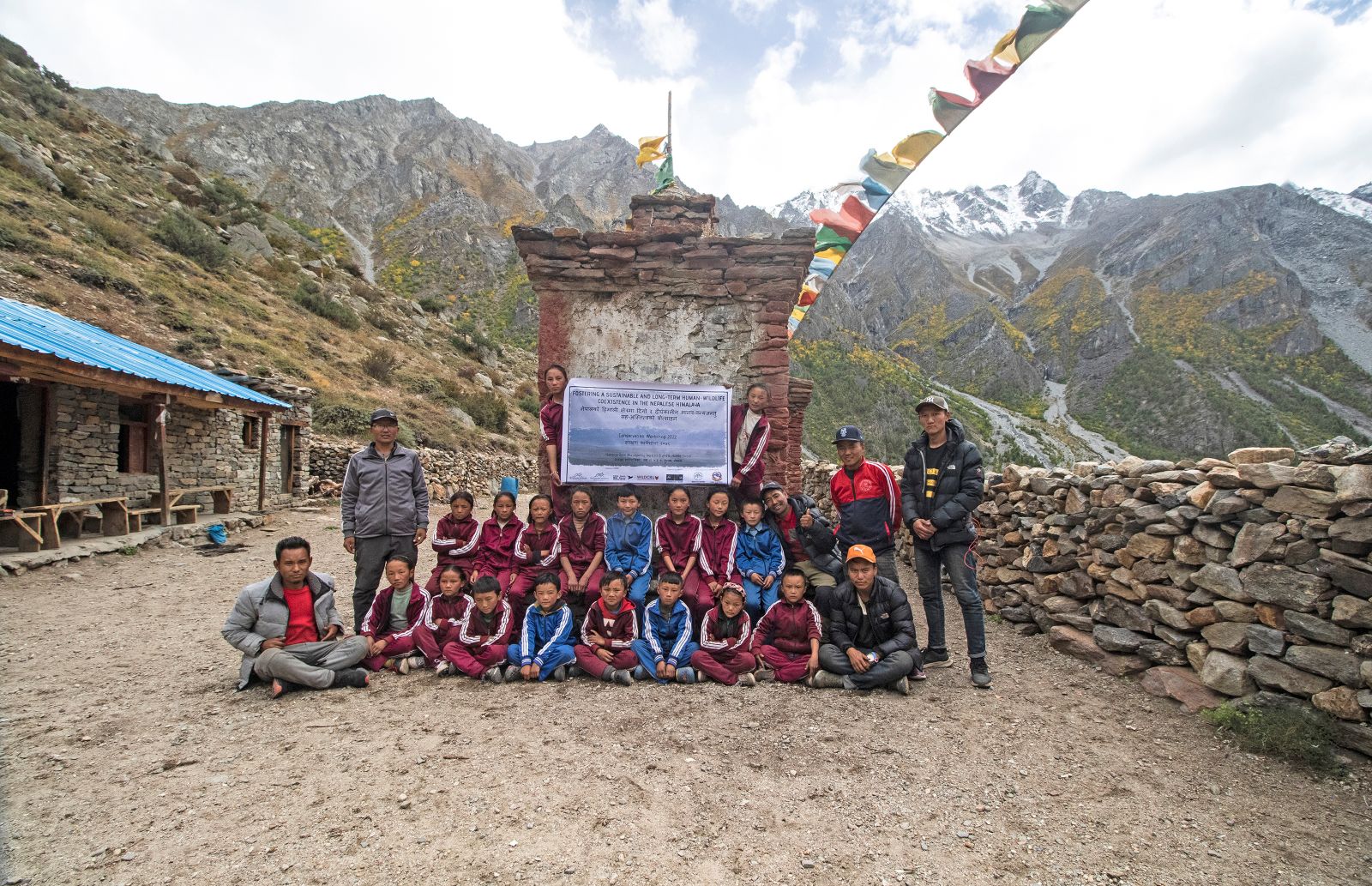
Our charity works in collaboration with the Himalayan Wolves Project, providing genetic support from our RZSS WildGenes lab.
Below, Naresh Kusi, Nepal Country Program Manager for the Himalayan Wolves Project, gives us an overview on the project’s progress between 2023 and 2025.
Research and fieldwork
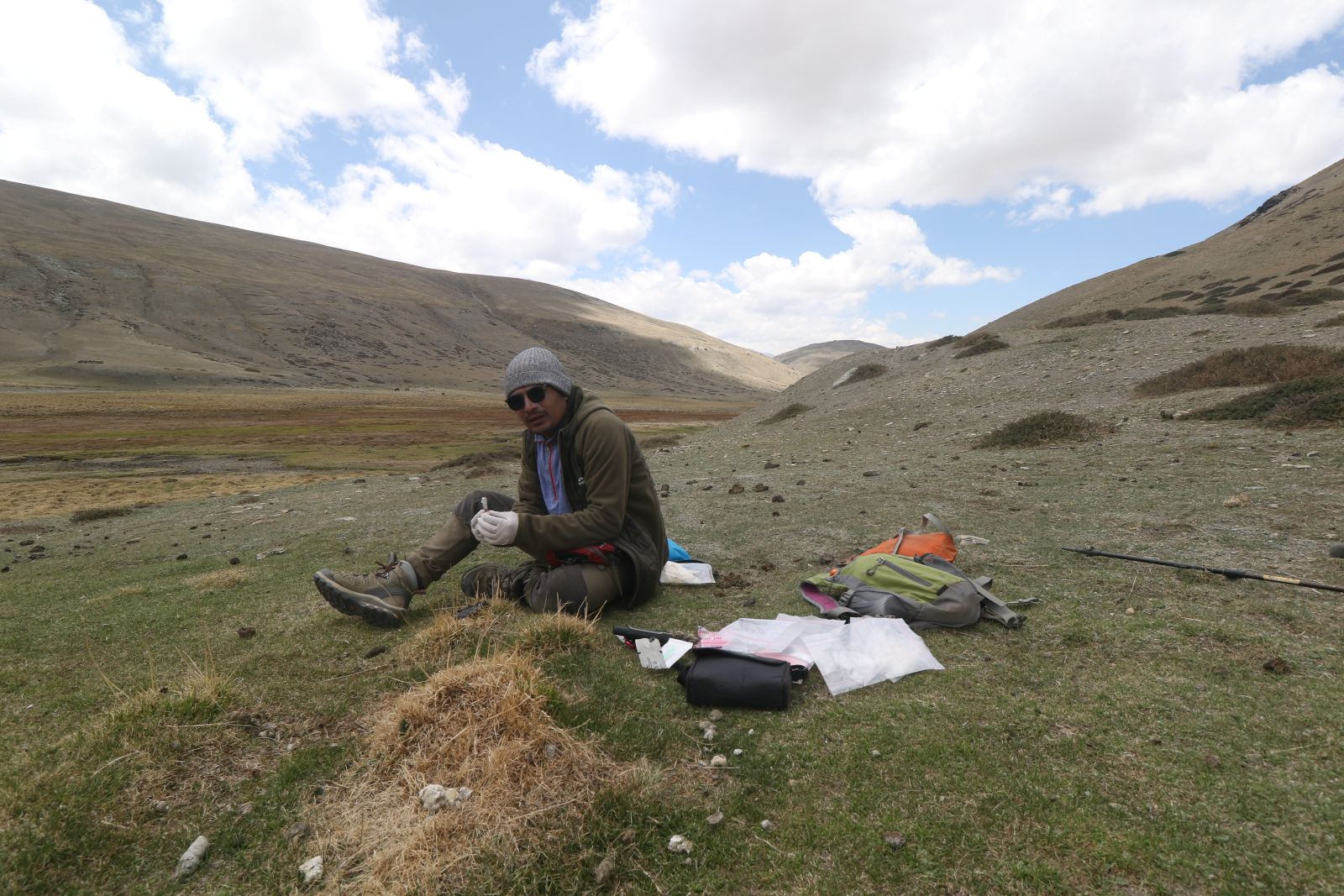
Naresh Kusi collecting a faecal DNA sample in the Dhalung rangeland, Upper Mustang, Annapurna Conservation Area CREDIT Himalayan Wolves Project
Between 2022 and 2024, Naresh Kusi, a PhD scholar at the University of Inland Norway and with the Himalayan Wolves Project, carried out extensive research in Nepal as part of his doctoral study on Himalayan wolves. This work is part of the Himalayan Wolves Project.
Over the course of three years, Naresh and team conducted a series of high-altitude research expeditions across some of the most remote landscapes of the Nepalese Himalaya. His surveys took place in Upper Humla (2022), the Upper Mustang region of Annapurna Conservation Area (2023), Gaurishankar Conservation Area (2023) and Sagarmatha National Park (2024).
The fieldwork combined ecological monitoring with non-invasive genetic techniques. Faecal DNA samples were systematically collected from wolf scats to investigate population genetics, diet and distribution. In parallel, distance sampling surveys were conducted to estimate the abundance and density of wild prey species critical to wolf survival, including the Kiang, Tibetan gazelle, naur or blue sheep and Himalayan tahr. Recognising the importance of human–wildlife interactions, the team also monitored domestic livestock populations such as yaks, goats and sheep, which often overlap in resource use with wild prey species.
Together, these efforts are generating an integrated ecological and genetic dataset that will enhance understanding of the conservation needs of Himalayan wolves within Nepal’s fragile high-altitude ecosystems.
Community-based conservation
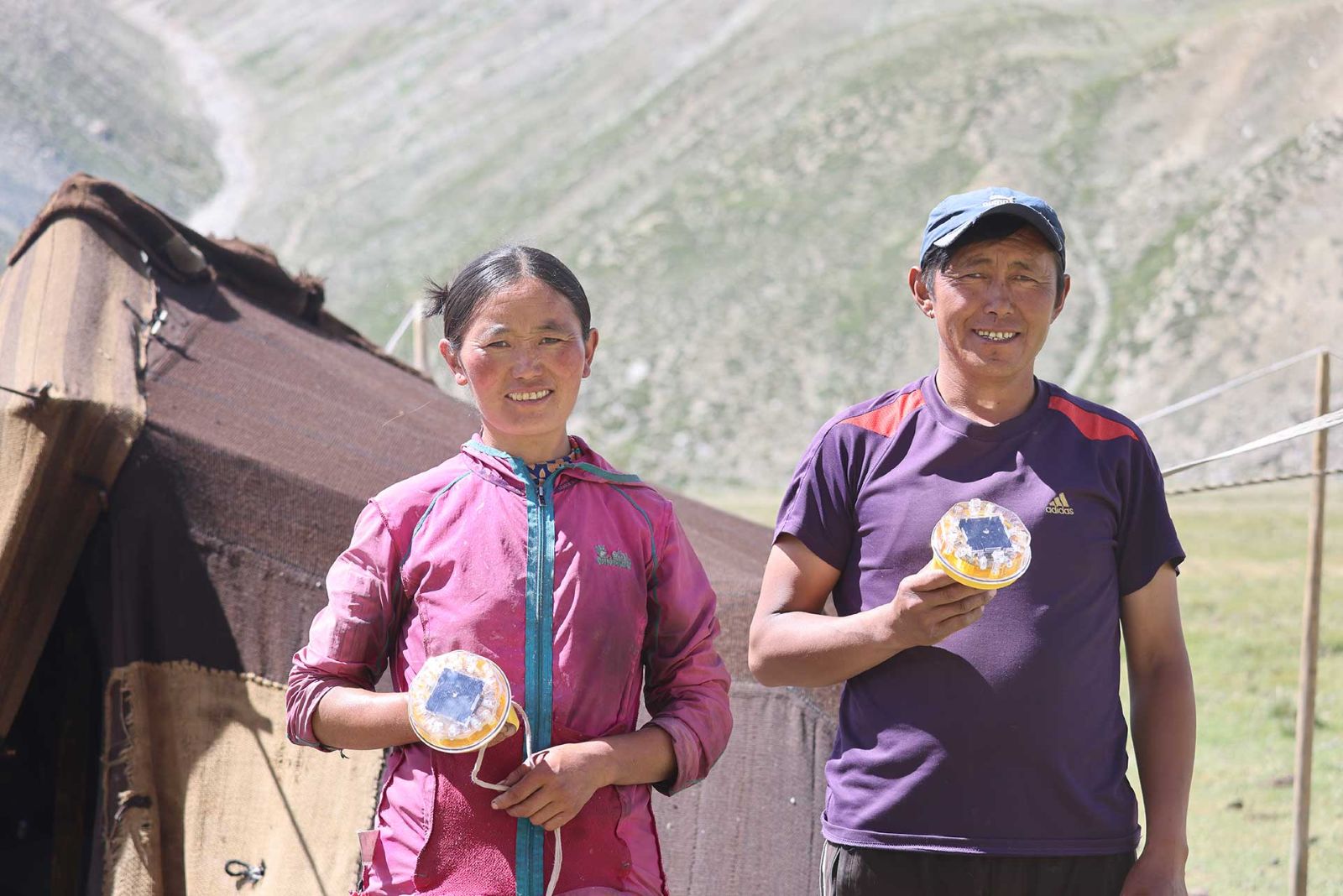
Yak herders using foxlights CREDIT Himalayan Wolves Project
From September 2022 to March 2023, the Himalayan Wolves Project handed over a series of communal predator-proof livestock corrals to local communities in Upper Humla for use during the challenging winter months. These corrals were built to protect vulnerable livestock - particularly yak calves - which are especially prone to attacks by snow leopards and wolves when forage is scarce and herders have limited mobility.
Since their handover, the corrals have been actively used by the communities, helping to reduce livestock losses and associated economic hardship. Their effectiveness has been further strengthened using predator-deterring fox lights, which emit intermittent flashes at night to ward off carnivores. Education workshops have been conducted with the communities conveying the importance of the various wildlife species and introducing wildlife monitoring tools. Together, these interventions have significantly reduced carnivore-livestock conflict, offering a practical and replicable model of coexistence that benefits both pastoral livelihoods and wildlife conservation.
To learn more about the interventions and their impacts on local communities and biodiversity, watch this short film documenting the Himalayan Wolves Project’s work in Upper Humla, north-western Nepal, between 2021 and 2024.
Genetic investigations
This year the RZSS WildGenes team have been supporting Naresh Kusi by generating genetic data suitable for the individual identification of Himalayan wolves in Nepal. Genetic data was produced using non-invasively collected faecal samples which are a useful source of genetic material from elusive and wide-ranging species such as the Himalayan wolf. This data will provide valuable insights into the population connectivity in the region as well as contribute to more accurate population size estimates. A better understanding of the wolves will help to support the long-term monitoring of the population and help to inform effective conservation management of the species.
Find out more about more about Himalayan wolf conservation