
The moth-er lode: Conservationists flutter to Cairngorms for bumper egg release
Posted 6 May 2026
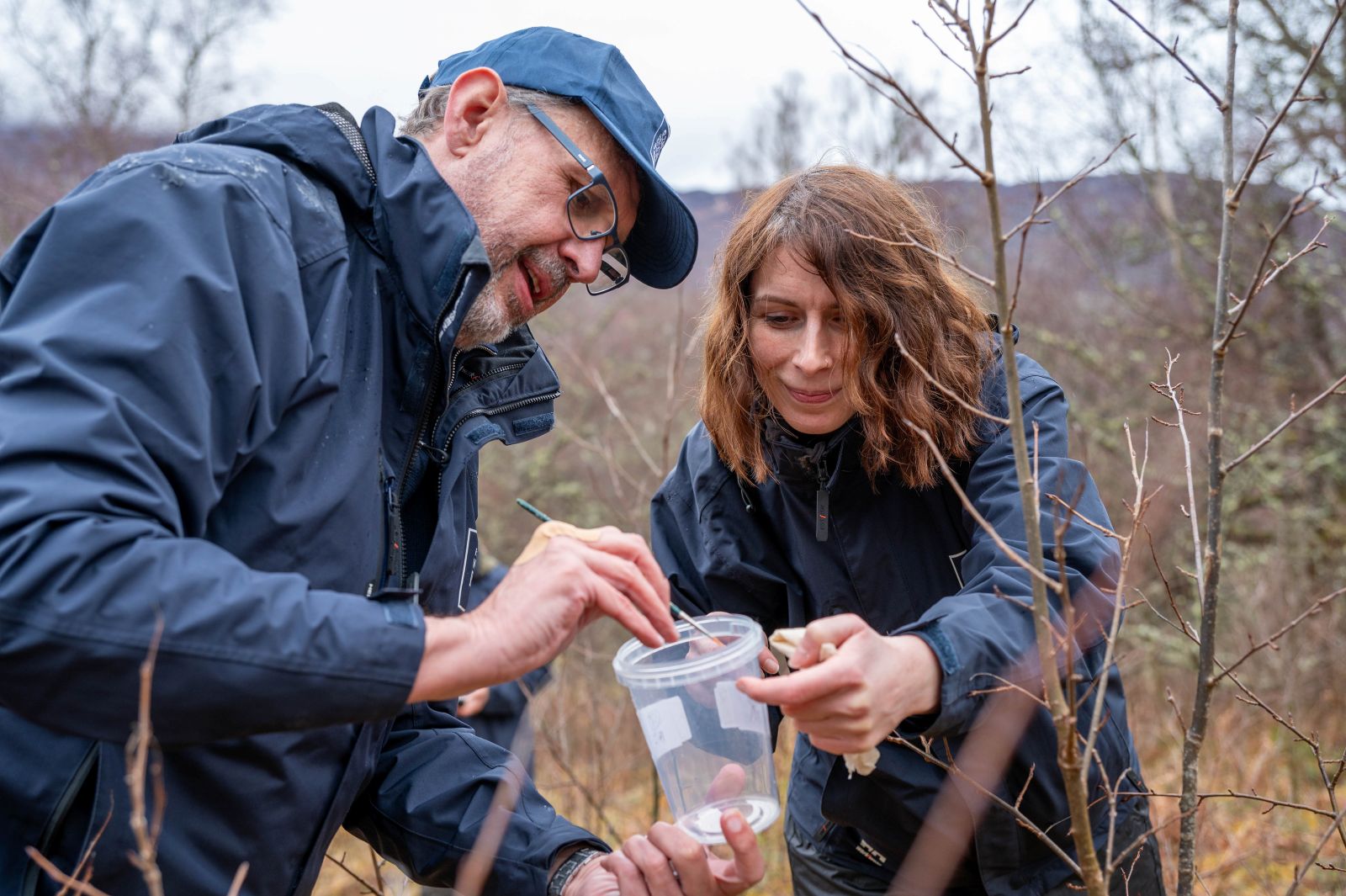
4,000 dark bordered beauty moth eggs have been released in the Cairngorms National Park in a bid to establish a new population of this endangered species. The release represents a tenfold increase on the number introduced at the same site in 2025.
A 20-strong team made up of wildlife conservation charity the Royal Zoological Society of Scotland (RZSS), RSPB Scotland and Butterfly Conservation, carried out the release. The eggs were bred by RZSS as part of the Rare Invertebrates in the Cairngorms (RIC) project.
RZSS conservationist Adam Button said: “It was quite the occasion, bringing together so many faces from the project - including our CEO, David Field - to release this remarkable species. There was a real sense of celebration and optimism in the air. It was a wonderful day and I look forward to returning to see how the eggs have fared.”
The dark bordered beauty moth was once widespread across northern England and Scotland. Habitat loss has caused a serious population decline, and it is now restricted to just three small sites: Deeside and RSPB Insh Marshes in Scotland, and Yorkshire in England.
The eggs were taken to a hillside clearing that forms part of WildLand Cairngorms, which receives careful habitat management. This location is rich with aspen suckers, wildflowers and thick, damp mossy ground cover. This environment is perfect for the moth species.
David Hill, Butterfly Conservation head of nature recovery for Scotland, said: “Healthy aspen woodlands are incredibly important for a range of invertebrates in the Cairngorms, and the WildLand estate have done a great job here. We hope this egg release is a big step forward in securing the future of dark bordered beauty in the Cairngorms. This project clearly demonstrates the importance of working together in partnership to take effective action for species and their habitats.”
Using a paintbrush, conservationists carefully placed the eggs onto the base of the aspen suckers, replicating the moth’s suspected natural egg-laying behaviour. It is hoped that as many caterpillars as possible hatch, survive and pupate into adult moths. The RIC team will return to the site in July and August, using light traps to determine whether the release has been successful.
Carl Allott RIC Project officer said “With so many eggs released this year it’s a really exciting prospect to find dark bordered beauty moths in the traps in July and August. With the encouraging aspen habitat at this site, it will be great to see the population expand and recover. Getting to this point has involved a lot of hard work from partners, volunteers and land managers.”
Follow up monitoring will allow the team to refine reintroduction strategies, increase population numbers and reconnect fragmented populations.
The conservation breeding and release project for this species is delivered as part of the RIC project. This is a partnership between RZSS, Butterfly Conservation Scotland, RSPB Scotland, Cairngorms National Park Authority, Buglife Scotland and NatureScot.
This work is possible thanks to the Cairngorms National Park Authority, Cheeky Panda, players of Postcode Lottery, The John Swires Trust 1989, The Cairngorms Trust and the Scottish Government’s Nature Restoration Fund, managed by NatureScot.