
Roll up! Roll up! It’s World Armadillo Day!
Posted 13 Aug 2026
/giant-armadillo-box.jpg)
We are celebrating our armoured friends on World Armadillo Day!
RZSS is fortunate to be partners with and support The Wild Animal Conservation Institute/Instituto de Conservação de Animais Silvestres (ICAS) to protect Brazilian biodiversity including the giant armadillo (Priodontes maximus).
ICAS created the Giant Armadillo Conservation Program to research and protect this mega species in the Pantanal, Cerrado, Atlantic Forest, and Amazon biomes of Brazil. ICAS uses camera traps, radio transmitters and biological material to learn more about the behaviours and health of these elusive animals.
The giant armadillo or tatu-canastra is the largest living species of armadillo and is listed as Vulnerable by the IUCN Red List of Threatened Species. They are solitary, nocturnal animals who eat termites, ants and even bee larvae if they get the chance!
/icas-with-burrow.jpg)
ICAS works with beekeepers living alongside giant armadillos as part of the Armadillos and Honey Project to protect beehives, local incomes and the armadillos themselves. Giant armadillos are known as ecological engineers because they use their huge claws to dig burrows that can reach 5 metres in length and 1.5 metres in depth. When they leave, the burrows are used by hundreds of other species as a refuge from the heat or the cold.
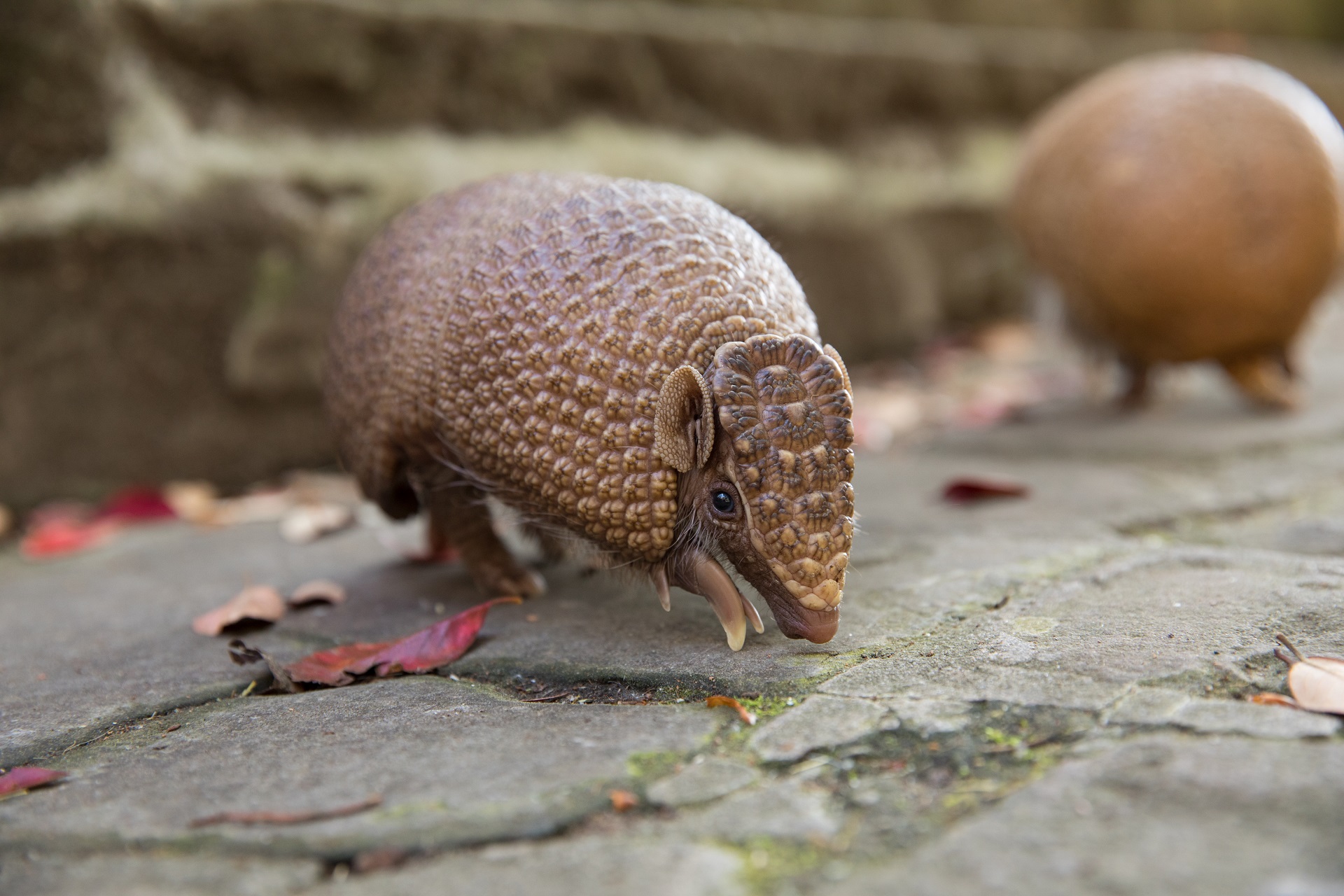
The three-banded armadillo (genus Tolypeutes) is the only type that can roll itself up into a perfect ball for protection. ICAS has surveyed and mapped the distribution of three-banded armadillos across Brazil's Center-West region to support the development of a detailed conservation action plan for the species.
Edinburgh Zoo is home to five Southern three-banded armadillos that you can visit and by doing so help support the work of ICAS to protect Brazilian biodiversity!
/lucas_icas_edinburgh_zoo.jpg)
In case you missed it, check out the interview with Lucas, a biologist leading ICAS’s giant armadillo conservation project, who we had the pleasure of hosting at Edinburgh Zoo back in April.
Giant Armadillo fun facts:
- They have around 80 – 100 teeth (more than any other terrestrial mammal)
- The giant armadillo is the largest armadillo in the world reaching up to 1.5 metres (5 ft) in length (including the tail) and weighing over 50 kg (110 lb).
- The giant armadillo spends more than 80% of its time inside the burrow sleeping!
- They have enormous claws. The middle claw on each forefoot can reach up to 20cm (8 inches) long - bigger than one of a polar bear! It is perfect for digging into hard soil and termite mounds.