World Wildlife Day 2026
Posted 3 Mar 2026
Every year on World Wildlife Day (3 March) we celebrate the extraordinary diversity of life on Earth and reflect on how deeply interconnected species, habitats and people truly are. This year’s theme, ‘Medicinal and Aromatic Plants - Conserving Health, Heritage and Livelihoods’, reminds us that plants are far more than a backdrop to the natural world. They feed ecosystems, heal animals, support cultures and sustain communities.
At the Royal Zoological Society of Scotland (RZSS), our strategy commits us to reversing the decline of at least 50 species, connecting over a million people with nature and empowering more than 100 communities to protect the natural world by 2030. These ambitions come to life in landscapes stretching from the Scottish Highlands to the rainforests of East Africa and plants are central to them all.
Tropical rainforests are among the planet’s most important ecosystems, absorbing vast amounts of carbon, regulating climate and supporting immense biodiversity. Yet they are disappearing at an alarming rate. Uganda’s Budongo Forest is unusual in that it still contains towering, mature mahogany trees… giants that have vanished from many other forests. Their survival is thanks in part to the long-term protection efforts of the RZSS-supported Budongo Conservation Field Station (BCFS). These trees are not only powerful carbon stores, they are living ecosystems, supporting countless species.
Conservation here goes beyond protecting trees and wildlife. Many households living alongside the forest experience food insecurity and the challenges of crop raiding by animals. BCFS works closely with local communities, offering training opportunities and supporting the cultivation of crops that are less attractive to wildlife. By strengthening livelihoods, we reduce pressure on the forest itself, demonstrating that conservation succeeds when people are part of the solution.
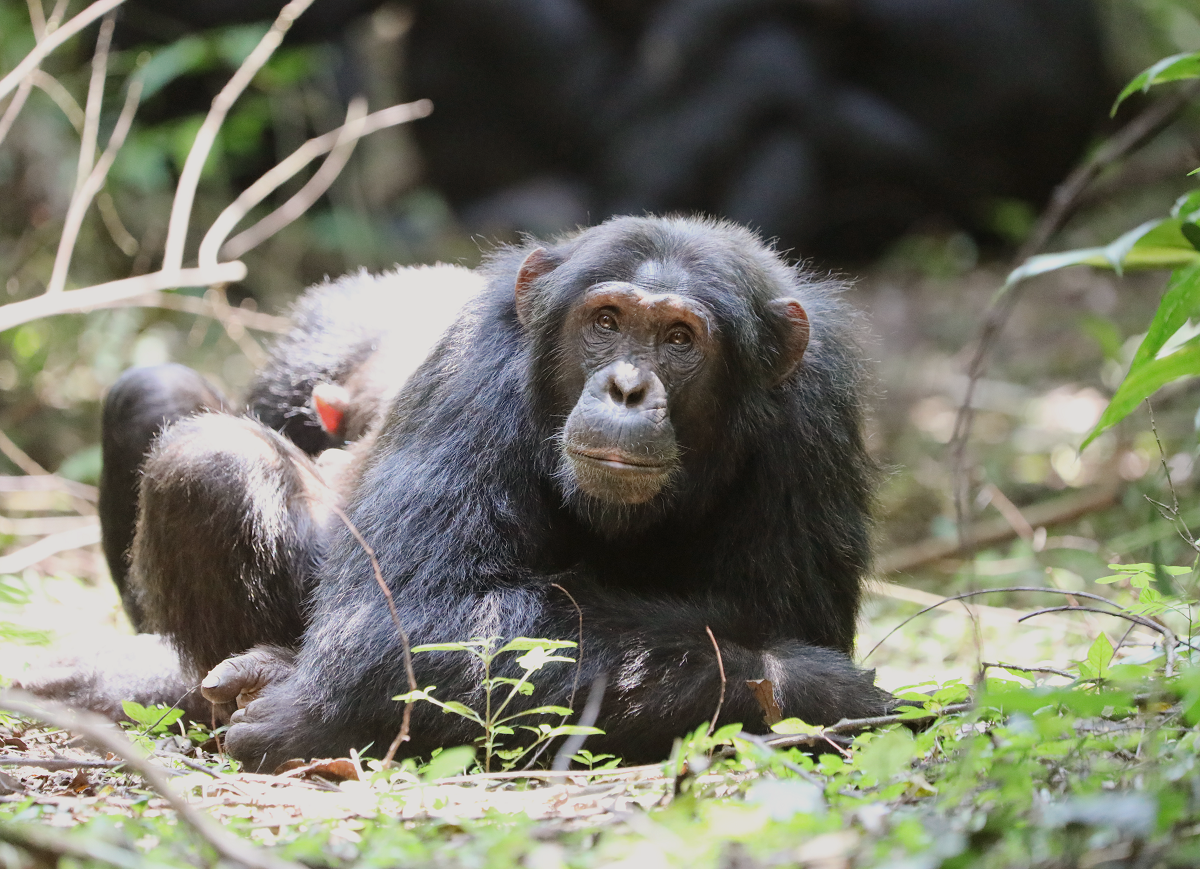
Budongo’s chimpanzees are also revealing extraordinary insights into the relationship between plants and health. Research has shown that chimpanzees may intentionally select specific tree barks and vines, including Alstonia boonei and Scutia myrtina, for their medicinal properties when they are sick or parasitised. Behaviours that mirror traditional plant use by local people! It is a powerful illustration of how plants underpin both wildlife wellbeing and human heritage.
Closer to home, Highland Wildlife Park is delivering habitat restoration through our Biodiversity Action Plan. Our forest management work improves the quality and diversity of wooded areas by removing invasive species such as Japanese rose and controlling bracken so native plants can flourish.
Wildflower meadows and carefully managed grasslands are creating safe havens for pollinators, including one of Scotland’s rarest insects, the small scabious mining bee. Recent surveys uncovered dozens of nest sites, highlighting the park’s role as a vital link in pollinator networks. These tiny insects rely on plants such as Devil’s-bit scabious, showing how plant-rich habitats directly enable species recovery.
In the Pentland Hills, RZSS conservationists have released thousands of rare pond mud snails. Though small and easily overlooked, these snails recycle nutrients from decaying plants and help maintain healthy freshwater ecosystems. Meanwhile, a new conservation strategy for the Critically Endangered pine hoverfly is guiding habitat restoration and long-term monitoring to secure a future for this unique woodland species.
From chimpanzees seeking medicinal bark in African rainforests to bees pollinating Scottish Highland and snails sustaining wetlands, one truth connects them all: plants are at the heart of life. They bind ecosystems together, support wildlife survival and sustain human communities.
On World Wildlife Day, we celebrate these vital connections and our commitment to strengthening them. By restoring habitats, supporting communities and reversing species decline, we are protecting not just individual animals or plants, but the living web that sustains us all.
Support conservation work around the world