Exploring chimpanzee self-medication in Budongo
Posted 3 Dec 2025
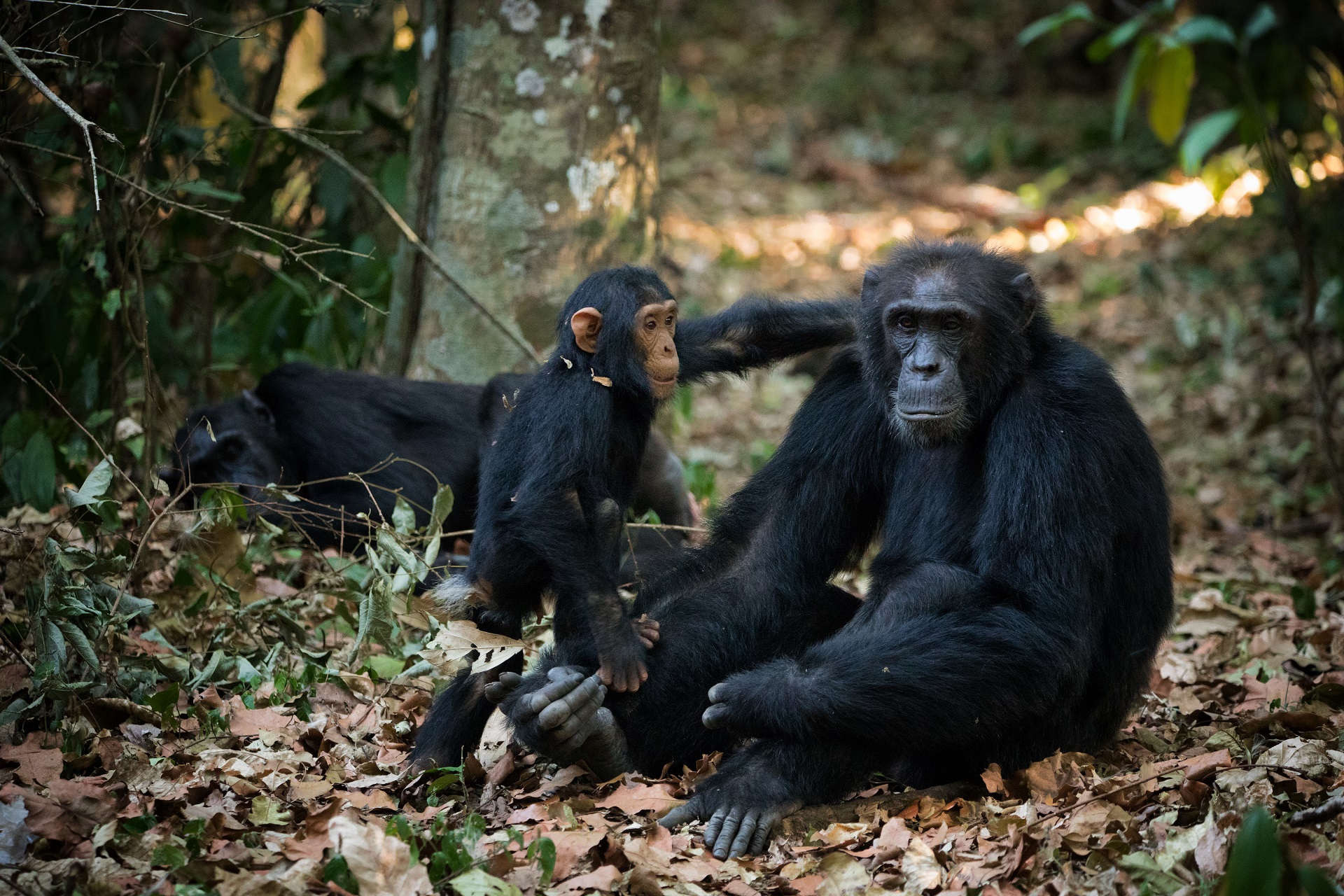
This year we’re excited to be celebrating the 20th anniversary of our support to the Budongo Conservation Field Station (BCFS) in Uganda. BCFS is a small organisation with a massive impact, working to protect the Budongo forest, the largest rainforest in East Africa, home to thousands of species.
In the depths of Budongo forest, research into chimpanzee self-medication has revealed complex behaviours that showcase how these primates may instinctively treat their own healthcare needs. We recently spoke to Dr Elodie Freymann, a researcher who spent time at Budongo Conservation Field Station (BCFS) studying chimpanzees and the plants they may be using for medication.
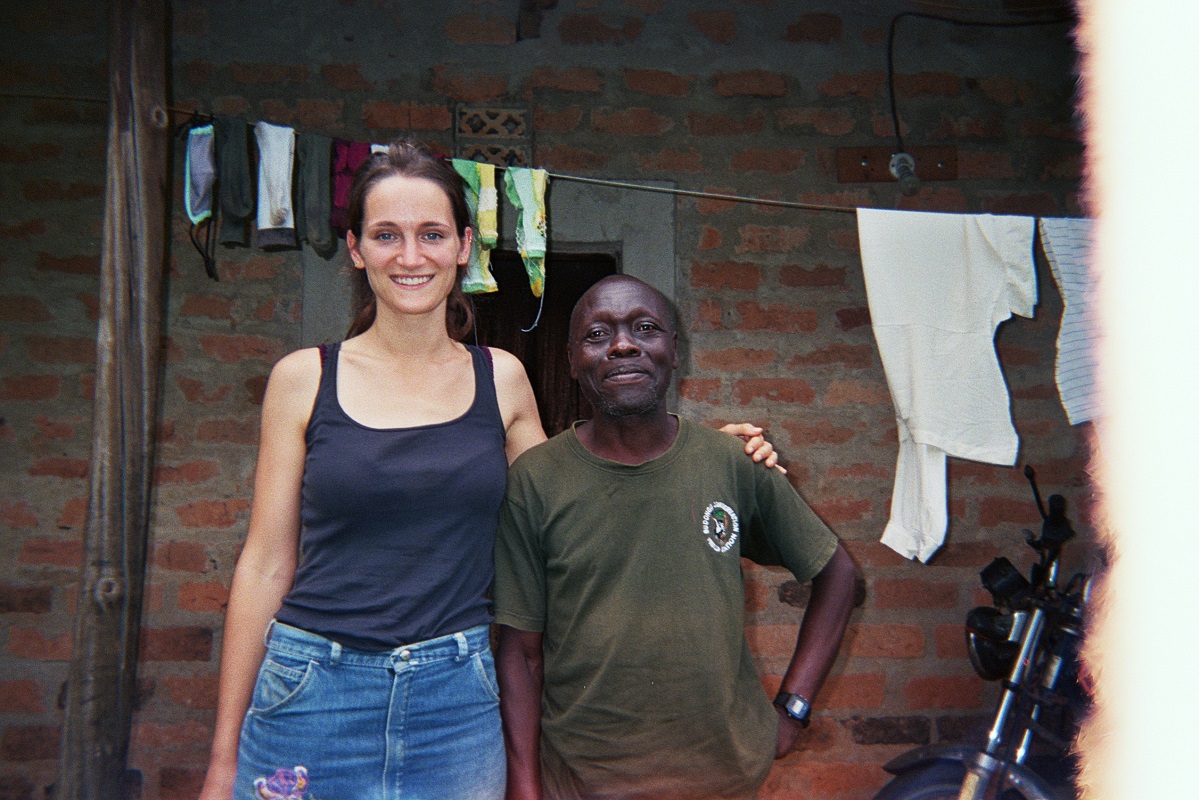
Dr Elodie Freymann and Geresomu Muhumuza at Budongo Conservation Field Station
I first arrived in Budongo in June 2021 during the pandemic and my experience there would transform the way I understood both conservation and science.
My initial months were spent immersed in the rhythms of the forest, guided by the extraordinary expertise of the Budongo Conservation Field Station staff. Many of these local field researchers have spent decades observing the chimpanzees, developing an unparalleled understanding of their behaviours and the forest ecosystem. Their insight was critical; and with their knowledge it was much easier to identify which plants might hold medicinal value for the chimpanzees.
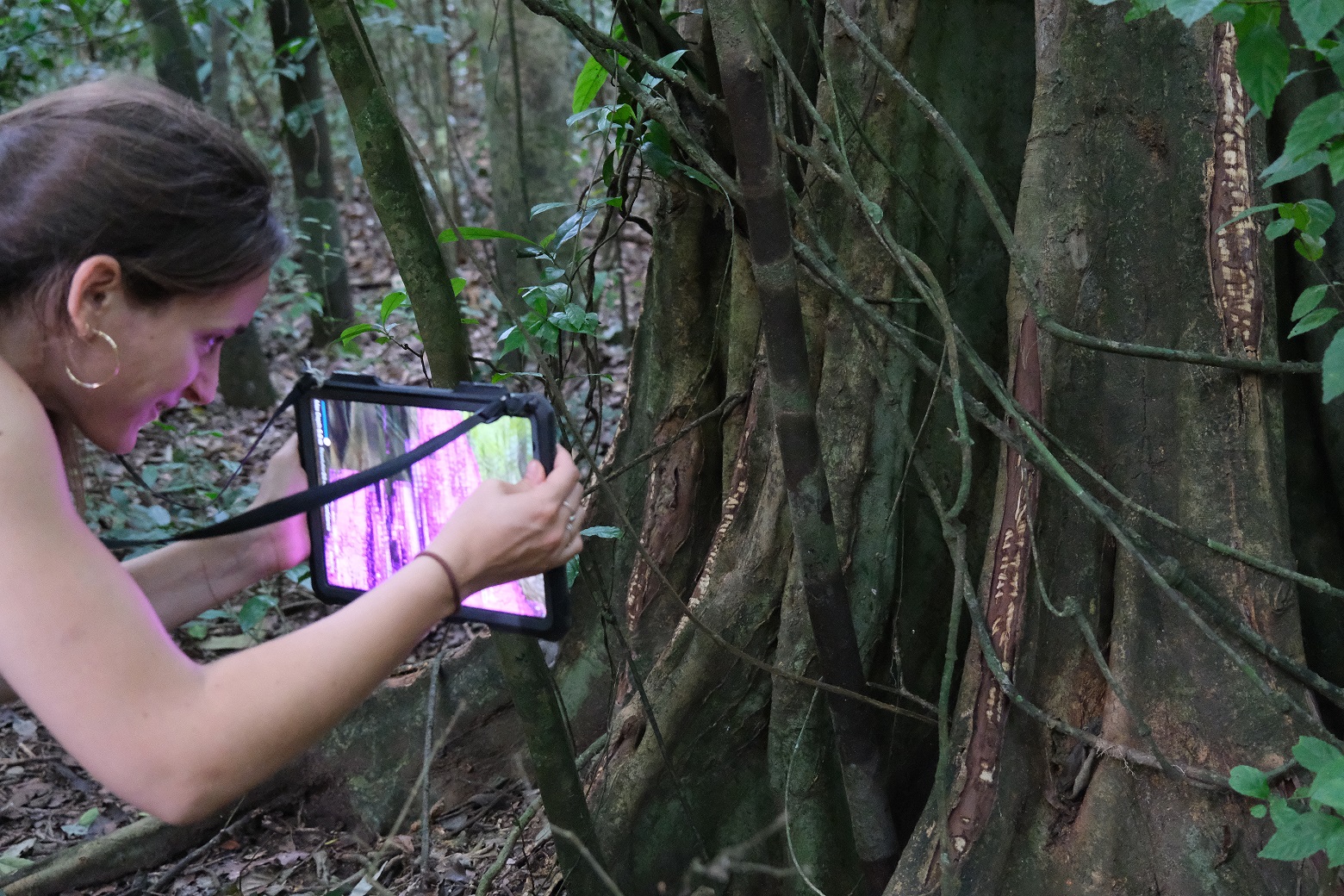
3D scanning chimpanzee bite marks on a Ficus exasperata tree
One of my main research focuses was on a behaviour called bark feeding, which (as the name suggests) is when animals eat bark from trees. One tree in particular stood out to me, a species called Alstonia boonei. Throughout the course of my fieldwork, we gathered several lines of evidence which suggested that the bark of A. boonei was no ordinary food. Our laboratory tests later confirmed that this had strong antibacterial properties, and we also learned that people in nearby communities use the bark as a powerful medicine. Lastly, in a few cases, we observed sick or injured chimpanzees targeting barks, including A. boonei –hinting at a sophisticated form of chimpanzee self-care.
Another fascinating moment came when I followed two chimpanzee brothers, Muhumuza and Mbotella, as they journeyed through the forest. They stopped at almost every plant I had identified as being potentially medicinal, before finally heading straight to a vine called Scutia myrtina. It was a plant that even my collaborator Geresomu, a field staff member of over 30 years, had never witnessed the Budongo chimpanzees eating. Yet, the vine bore bite marks that had healed over time, suggesting chimps had been sporadically visiting and using the vine over several years. S. myrtina is already known to have anti-parasitic properties, and one of the brothers had a bad parasite infection. It's difficult to write stories like these into an academic paper but it’s so incredible when you witness them.
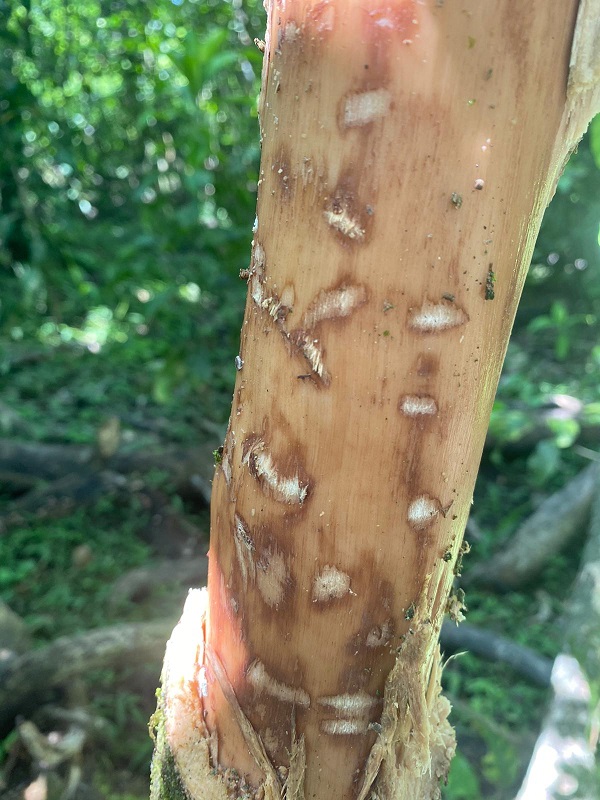
Chimpanzee bite marks on a Syzygium guineense tree
Self-medication in Budongo is not limited solely to plants. Chimpanzees also consume clay and termite mound soil, which may help detoxify the gut, soothe diarrhoea or even provide minerals or natural antibiotics. These behaviours are subtle and complex, requiring long-term observation to understand. Part of my work is to figure out if chimps are simply eating these substances for nutrition or if they are using them for medicinal purposes specifically.
What makes this work truly special is the collaboration with local field staff. Their lived experience with the forest and its wildlife provides insights that would take foreign researchers decades to achieve. They not only help identify plants and behavioural cues but also contribute knowledge from local medicinal practices. In 2022, we co-created a collective called Perspectives, a platform for BCFS staff to share their expertise through writing and film. This initiative continues to thrive, entirely run by the staff themselves, amplifying voices that are too often excluded from academic narratives.
Budongo Forest is a place where science and conservation meet lived experience. It is a sanctuary alive with the calls of chimpanzees, the flutter of hornbills and the quiet work of people dedicated to protecting it. My goal is to return, to continue learning from the chimps and the community that has made this research possible.