RZSS visits BCFS: Chimps, snare removal and a rare Nahan’s partridge sighting
Posted 19 Jan 2026
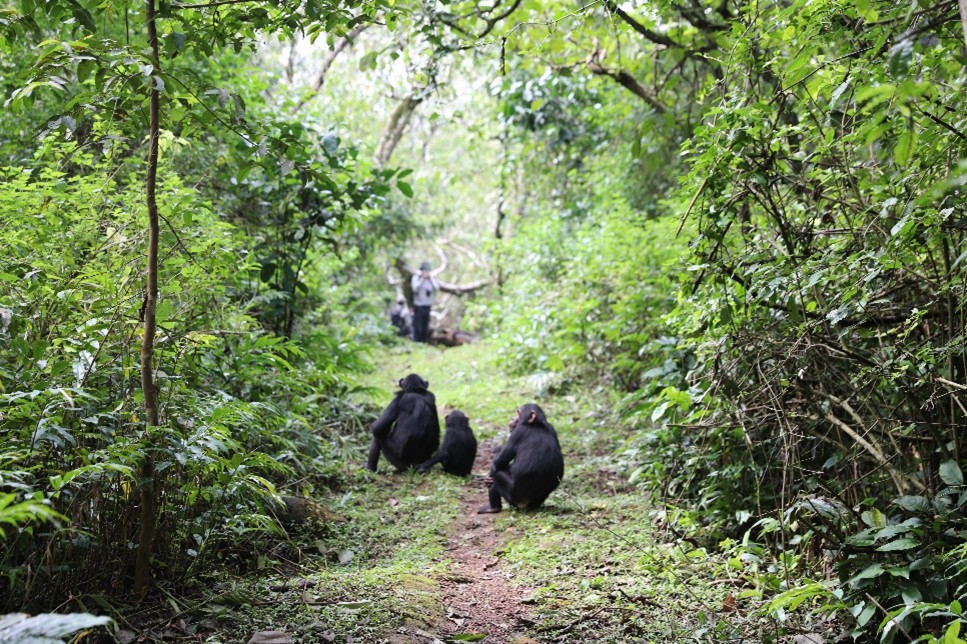
In September 2025, members of the Royal Zoological Society of Scotland's (RZSS) conservation and WildGenes team headed out to Uganda to work with our partners. Here, Laura Daniels reports on her time in the Budongo Forest.
In 2025, we celebrated 20 years of RZSS supporting the Budongo Conservation Field Station (BCFS). This partnership is our longest conservation collaboration to date and exemplifies the incredible progress that can be made for conservation through collaboration and long-term support.
BCFS is a conservation NGO located in Uganda’s Budongo Forest, East Africa’s largest rainforest. A team of Ugandan staff study and protect the forest’s 800 Endangered chimpanzees, who face threats from illegal logging and snaring across the Budongo landscape.
By monitoring the chimpanzees’ health, removing snares from the forest and establishing community outreach initiatives, BCFS are protecting Budongo’s chimpanzees and the thousands of other rare and threatened species that call Budongo home.
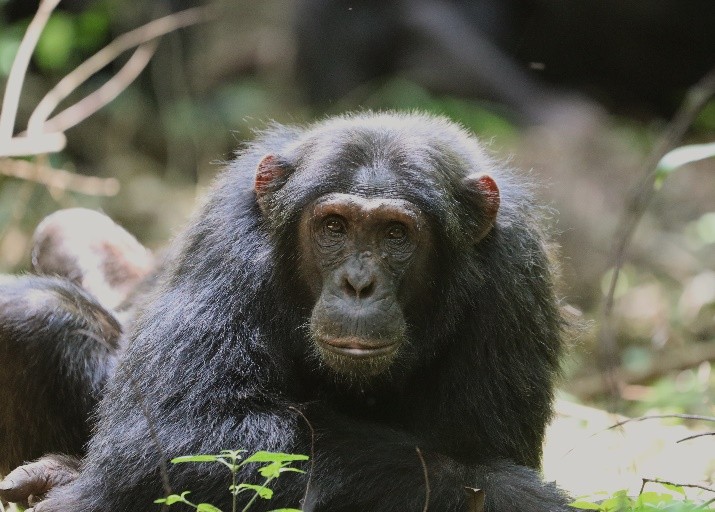
In September 2025, several colleagues from RZSS and I visited BCFS to deliver a conservation genetics training workshop. During this time, I had the opportunity to spend time in the forest with BCFS’ field teams.
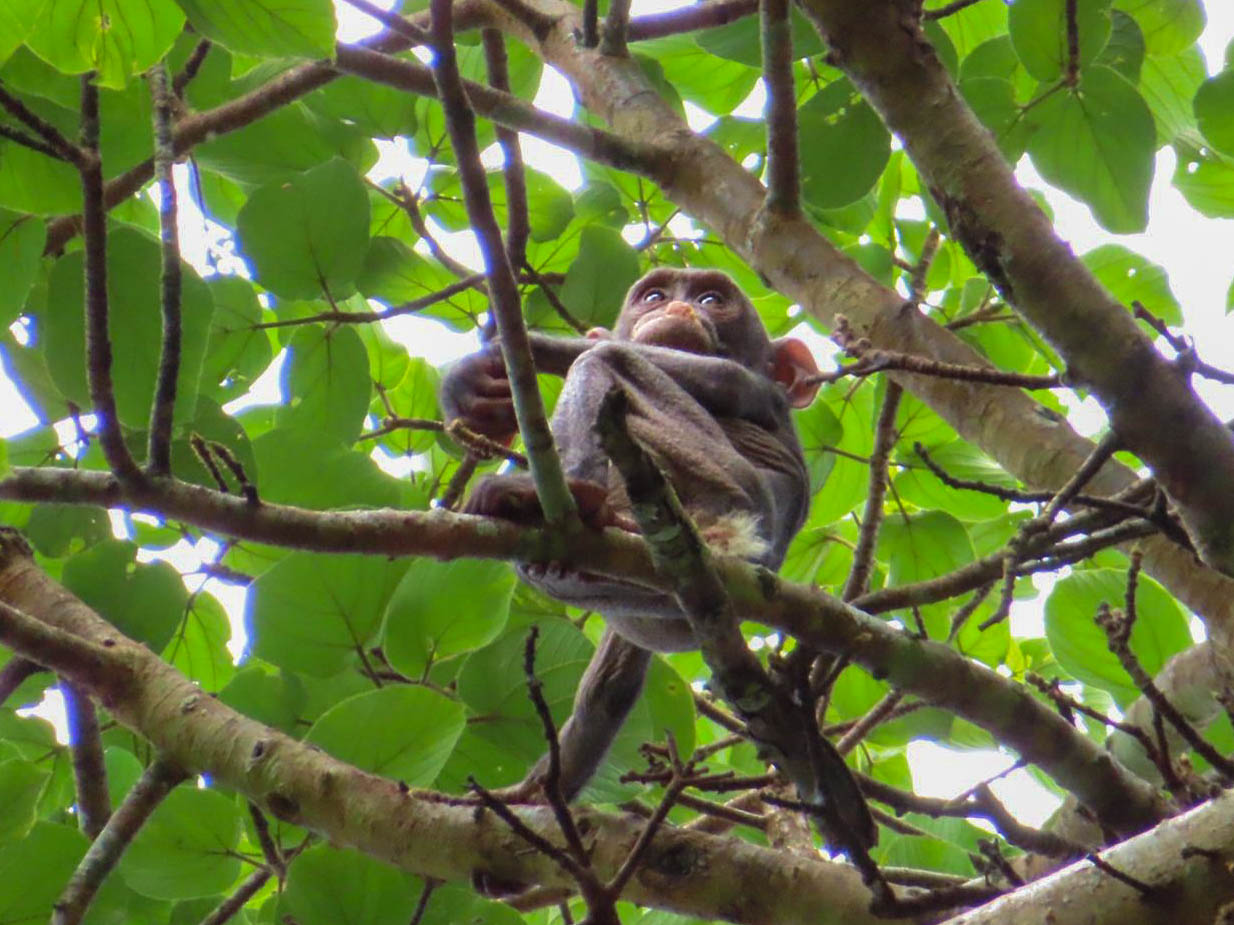
On my first day in the forest, I joined Monday. He is one of the expert field team who has been observing Budongo’s chimpanzees for 25 years, and he knows them almost as well as his own family! He told me about Rumi, a baby born just a few months ago without any hair.
This is the first time this has happened in BCFS memory and Monday was convinced the group wouldn’t accept him. Luckily, he’s been welcomed into the troop with open arms and seems to be thriving.
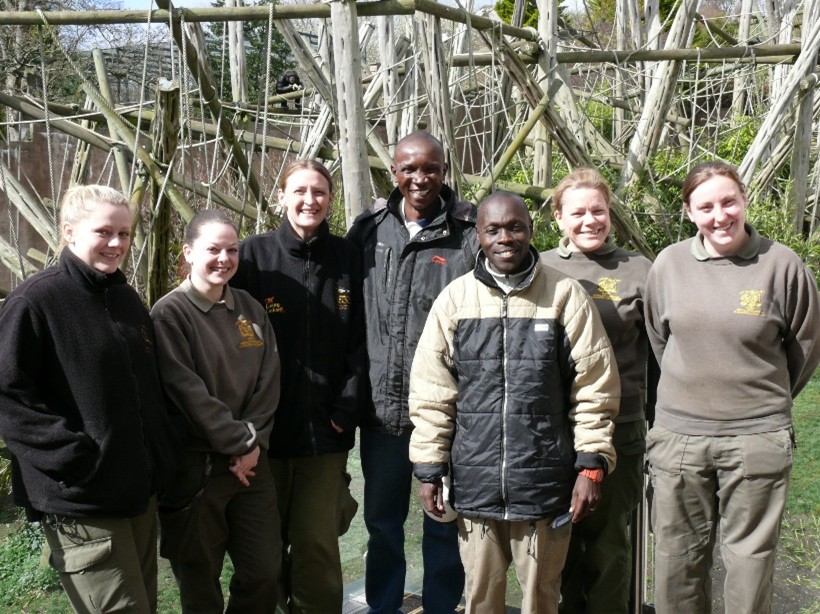
Monday reminisced about his visit to the Budongo Trail at Edinburgh Zoo in 2011. It was the first time he’d left Uganda, and he remembers being shocked by how cold it was, even with the sun shining.
Exchange visits between our organisations have been common throughout the partnership and are an excellent way to share knowledge and build capacity on both sides.
The next day of my trip I joined the snare patrol team. We set out into the forest early, marching at a rapid pace on the search for snares. Before long we left the path and were in dense, deep forest. Somehow, despite our pace, the team were able to spot the illegal wire snares set close to the forest floor. They were near-invisible to the untrained eye.
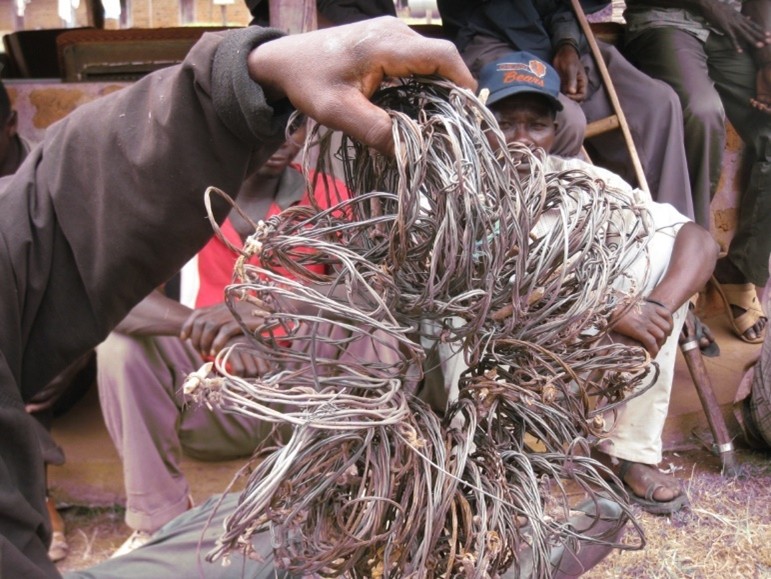
By the end of the day we’d removed 30 snares, all of which might otherwise have caught curious chimpanzees, causing disfigurement or death.
Since the patrol started, the team have removed over 54,000 snares from the forest and continue their important work every day, removing traps, snares and reporting illegal logging and charcoal burning.
Next, the purpose of our visit: delivering the training workshop – you can read more about this training from our research scientist Dr Jo Howard-McCombe, who led the workshop. The training provided the BCFS team with the skills needed to sequence DNA from the rare and elusive Nahan’s partridge. This unusual little bird is the focus of a new collaborative conservation project between RZSS and BCFS. The genetic work will allow BCFS to make informed conservation management decisions in the future for this threatened species.
Incredibly, following the workshop, we had the opportunity to join the team in searching for Nahan’s partridge, a notoriously difficult species to find. So much so that even after years of research, we only have one image of the bird.
This little bird has a big voice and is very territorial, so one of the best - and only - ways to find it is by playing the bird’s call on a speaker. If the wild birds hear you, they’ll call back because they don’t welcome other partridges in their territory.
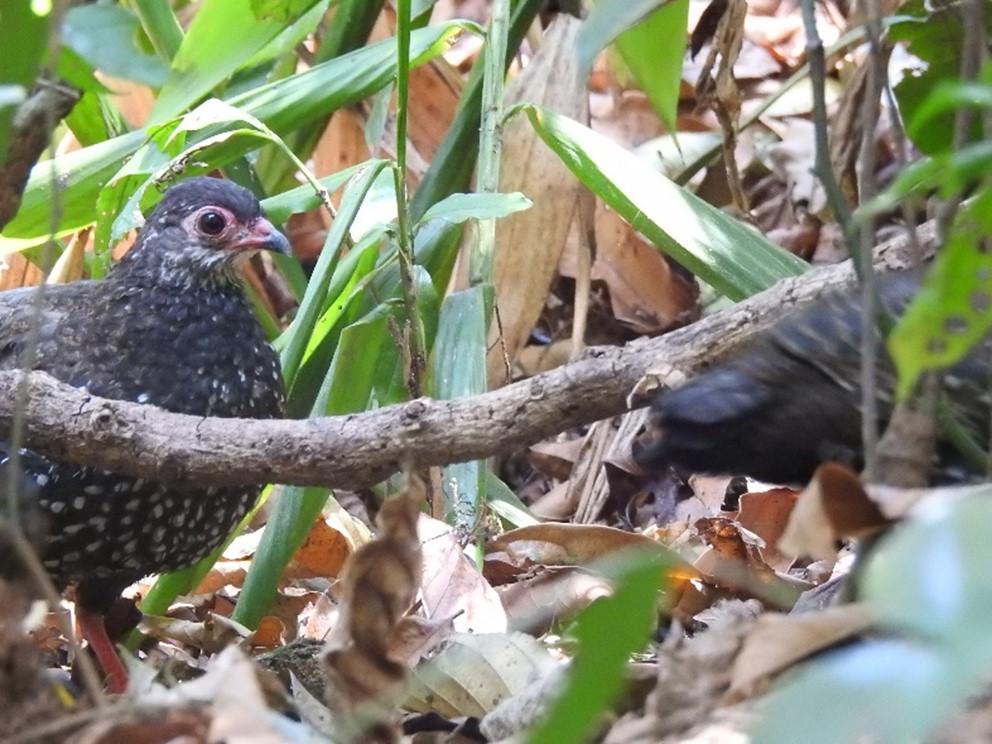
At first, we didn’t hear anything promising, even after visiting several locations. We’d almost given up hope until – suddenly – we heard them. A small group were calling back. They got closer and closer, calling all the time until two little heads were peering out at us from a dense shrub. Then, with a bob of the head, they were gone! Satisfied that we weren’t invading partridges, the wild birds disappeared, ignoring our calls from the speaker. They wouldn’t be fooled again.

Seeing the birds was incredibly exciting and it’s thanks to the tireless efforts of MSc student Samson Esie Mwine, whose research was funded by our project, that we were able to find them. Samson has just completed his degree but plans to continue his work with Nahan’s partridge. He is beginning to survey for the species in Bugoma Forest just south of Budongo, as suspects the Nahan’s partridge population is experiencing rapid declines due to the construction of an oil pipeline nearby.
This makes his work all the more urgent and important – it’s great to see how he’s using the knowledge he gained from our project with BCFS elsewhere.
Finding Nahan’s partridge marked the end of our visit, which was hugely successful – the BCFS team are excited to use their new skills to sequence DNA from Nahan’s partridge in 2026. This training workshop is an example of the valuable knowledge exchange that can come from robust partnerships between organisations.